
Brofer RDCD50SH filters
-
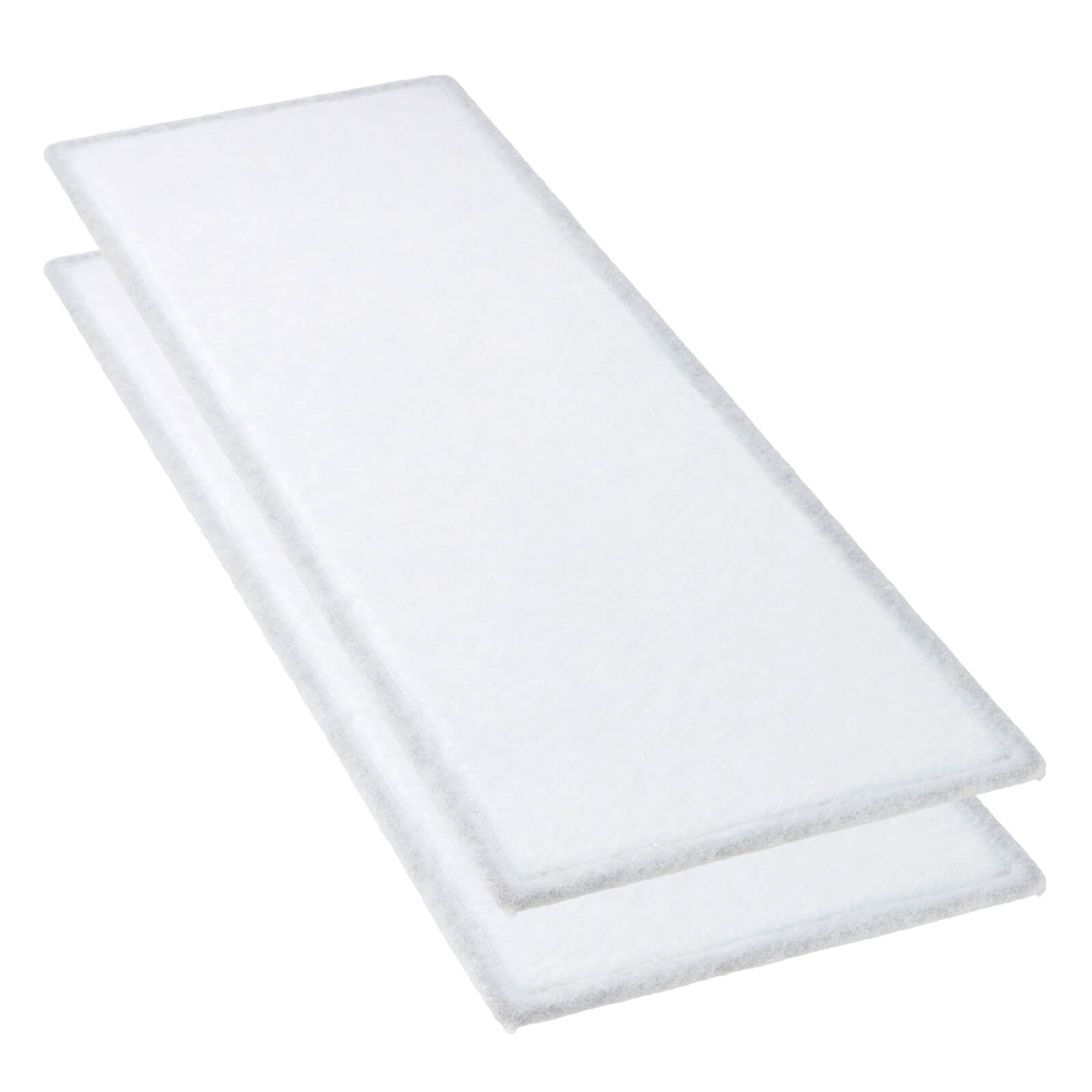 House brandExtract filter size: 600x218x10 mmSupply filter size: 600x218x10 mmFilter class (EN779): G4+G4Filter quantity in a set: 2 filtersProtection level
Filter protection level indicates efficiency in blocking particles or contaminants, varying by standard and application.
BasicGeneral dust and particle filtration
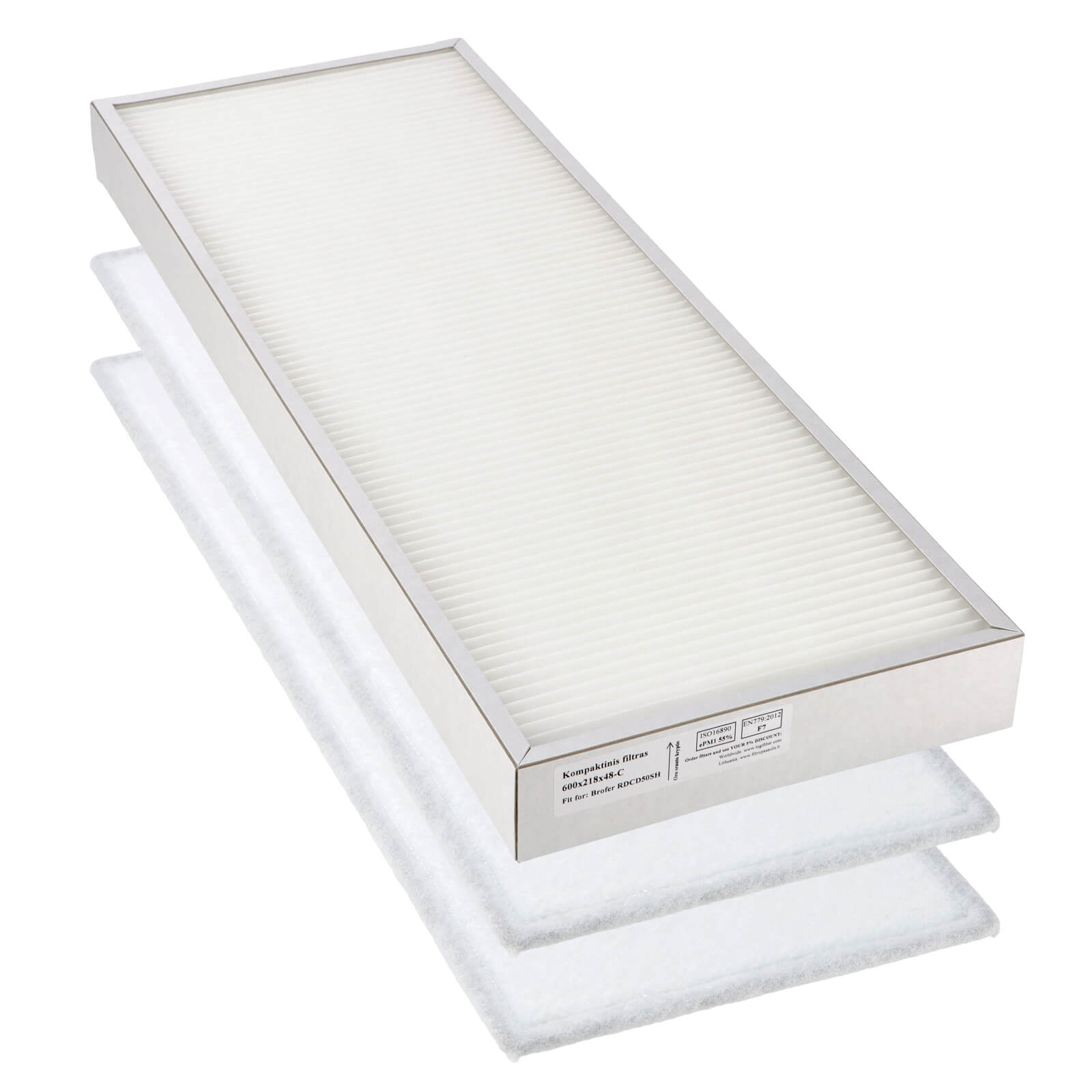 House brandExtract filter size: 600x218x10 mmSupply filter size: 600x218x10 mmSupply filter size 2: 600x218x48 mmFilter class (EN779): G4+G4+F7Filter quantity in a set: 3 filtersProtection level
Filter protection level indicates efficiency in blocking particles or contaminants, varying by standard and application.
BasicGeneral dust and particle filtration
Pollen and moldCaptures pollen, mold spores, and other allergens
Smog and bacteriaProtects against allergens and urban pollution
1-2 of 2

Customer Reviews


Trustpilot review
Trustpilot review
Trustpilot review
Trustpilot review
Trustpilot review
Trustpilot review
Trustpilot review
Need Help? Start Here.
We’ve gathered answers to the most common questions about our products and services. If you can’t find an answer here, please contact us directly.
How can I find the right filter for my Brofer ventilation unit?


Start with the model code on the unit's label — we stock filter sets for the Brofer RDCD25(SK), RDCD35SH, RDCD40SK/RDCD50SK, RDCD50SH and LQR280. If the label isn't legible, measure the extract and supply filters directly (length × width × depth in mm) and match them against the sizes on our product pages.
What filter classes are compatible with Brofer units?
Brofer units use G4 filters to protect the heat exchanger. For the RDCD models we stock two versions: a G4+G4 set, or a three-filter G4+G4+F7 set that adds a fine F7 (ePM1) supply filter for pollen and fine dust. The LQR280 is available as a G4+G4 set.
How often should Brofer filters be replaced?
We recommend the standard 3–6 month interval for Brofer units, checked more frequently in the first year after installation to establish how quickly your specific environment loads the filters. Homes with pets or nearby renovation work should lean toward the 3-month end of that range.
How should I store spare Brofer filters so they stay effective until I install them?
Keep unopened Brofer filters ready for installation by following a few simple storage rules:
- Leave them in their original packaging until you're ready to install
- Store in a dry, room-temperature space
- Keep away from direct sunlight and moisture
Filter media can absorb ambient humidity if left unwrapped for long periods, which slightly reduces its dust-holding capacity before it's even installed.
Does using a compatible Brofer filter instead of an original affect my unit’s warranty?
Using a correctly sized, ISO 16890-compliant compatible filter does not affect your Brofer unit's mechanical or heat-exchanger warranty, since filters are a routine consumable part rather than a structural component. Manufacturer warranties typically only require that filters meet the correct class and dimensions, not that they carry the original brand name.
We live near the coast — does sea air affect Brofer filters?
Yes, and more than most inland customers would guess. Along the Belgian coast the outdoor air carries a fine salt aerosol as well as wind-blown sand, and both load the supply filter faster than in an inland town — noticeably so during the windy autumn and winter months. Salt-laden dust that gets past a saturated filter is also harder on what lies behind it than ordinary household dust. If you are within a few kilometres of the sea, check the Brofer filters monthly through windy periods and plan for the shorter end of the 3–6 month range rather than the longer one. Keeping a spare set at home makes acting on what you find much easier.
Still Have Questions?
Support details to capture customers that might be on the fence.
Contact Us Now
